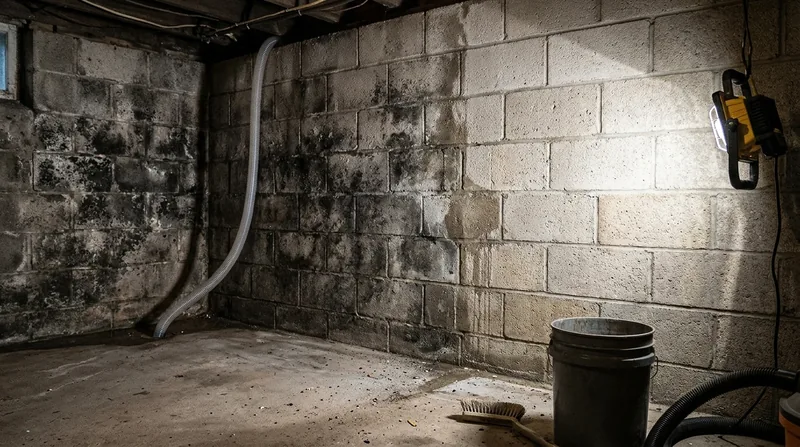




Basement Mold Remediation in Kenosha: Fix the Moisture, Then the Mold
If you live in one of the 1890s to 1920s brick two-stories on Kenosha's south side, a 1950s brick ranch on the west side, or a newer poured-basement home out in Pleasant Prairie or Somers, you already know the ground here stays wet from late winter into spring. Basement Mold Remediation in Kenosha means pulling out the mold that has taken hold on joists, drywall, and block walls, and then fixing the water path that fed it. Our work is below grade only. We find the moisture source, contain and treat the affected surfaces, and put the drainage or dehumidification in place so the growth does not come back. The glacial till and lake-deposited clay under this city hold water against your foundation, and the high water table keeps it there. Call (262) 287-9586 to schedule a free basement inspection. If you want the full picture of how we handle wet basements, start with our basement waterproofing service.
Why Mold Takes Hold in Kenosha Basements
Mold needs three things: moisture, organic material, and still air. Kenosha basements supply all three. The stone and early block walls in the older homes downtown and near the Pike River wick groundwater, and the damp shows up as efflorescence and a musty smell before you see any growth. The 1920s and 1940s bungalows and Cape Cods with partly finished basements trap that moisture behind paneling and carpet. Lake Michigan storms, spring melt, and heavy summer downpours push water toward the Pike River and into low corners. Winter frost and freeze-thaw cycles work into the walls and open the cracks that let water in. The failure mode that dominates here is damp block and stone from hydrostatic pressure, not a single burst pipe.
- Groundwater seeps through the cove joint where the wall meets the floor.
- Cracks in poured walls and mortar joints in block walls let water track through.
- A failed sump pump or a short discharge line leaves the basin overflowing.
- Poor grading and short downspouts dump roof water right against the foundation.
- Finished basement assemblies trap damp against framing and drywall.
Each of those paths leaves the basement wet long enough for mold to grow, so the moisture fix has to come first.
Key info: In the lakefront bluff homes at Simmons Island and Southport, the lower stone and concrete walls stay damp from groundwater moving under the footing, and a musty smell in a finished lower room is usually the first sign. The fix is drainage and moisture control, not a fresh coat of paint over the mold.
Wisconsin does not license mold remediation contractors as a separate trade, so check the company's credentials through the Wisconsin Department of Safety and Professional Services and ask for proof of insurance before work starts.
How We Handle Basement Mold Remediation in Kenosha
We start with the water, not the mold. A crew walks the basement with you, reads the walls and floor for seepage, checks the sump basin and pump, and traces where the moisture is coming from. We test the musty smell to confirm it is mold and not just damp concrete. Then we contain the work area, remove or treat the affected materials, and correct the moisture path so the growth does not return.
- We inspect the foundation walls, cove joint, window wells, and sump basin for active water entry.
- We set up containment with plastic sheeting and negative air pressure to keep spores out of the rest of the house.
- We remove porous materials that cannot be cleaned and treat the framing and block with an antimicrobial.
- We dry the space with commercial dehumidifiers and air movers until the readings are stable.
- We correct the source: crack injection, interior drain tile, a new sump pump, or grading and downspout work.
- We verify with moisture readings and a visual check before we pull the containment down.
You get a written scope that separates the cleanup from the moisture fix, so you know what each part costs.
Key info: A split-level in Pleasant Prairie had mold on the lower wall framing after a spring melt overloaded a 20-year-old sump pump. We contained the room, removed the affected drywall, treated the studs, and replaced the pump with a new sump pump installation and a battery backup. The basement stayed dry through the next heavy rain.
Remediation and Moisture-Control Methods We Use
Not every basement needs the same treatment. A small patch of surface mold on a block wall above a hairline crack is a different job from a finished room soaked by a failed drain tile. The table below shows the approaches we use and when each one fits.
| Approach | Description | Best for |
|---|---|---|
| Containment and surface treatment | Seal the work area, HEPA-vacuum the surfaces, and treat framing and block with an antimicrobial. | Surface mold on walls and joists with no active water entry. |
| Material removal and rebuild | Cut out soaked drywall, insulation, and carpet, then dry the framing before closing the wall. | Finished basements with mold behind paneling or under carpet. |
| Drainage correction | Install or repair an interior perimeter drain and sump basin to relieve hydrostatic pressure. | Wet walls and cove-joint seepage after rain or spring melt. |
| Crack injection and sealing | Use epoxy or polyurethane injection on poured-wall cracks, and parging or membrane on block. | Isolated leaks through a specific crack or mortar joint. |
| Dehumidification and vapor control | Run a dehumidifier and seal the floor and walls to keep humidity down between storms. | Damp basements with high humidity but no standing water. |
We match the method to the water path, so you do not pay for excavation when a drain tile and sump will solve the problem.
Basement Mold Remediation Cost in Kenosha: What to Expect
Most basement mold jobs in Kenosha start at From $1,500 and go up from there. That starting figure covers a contained cleanup of a limited area, surface treatment, and drying. The price moves with the size of the affected area, how much finished material has to come out, whether the mold is behind paneling or under carpet, and what moisture fix the basement needs. A job that includes an interior drain tile system or a sump pump replacement costs more than a surface cleanup, because the drainage work is a separate scope.
Access matters too. A low, unfinished basement in an older south-side home is easier to work in than a finished room full of furniture and stored boxes. If the mold sits behind a finished wall, we have to open it, dry the framing, and close it again. Get two or three written estimates so you can compare the scope, not just the bottom line. Our full pricing overview breaks down the ranges for each part of the work.
Finding Basement Mold Remediation Near Me in Kenosha: What to Check
When you search for basement mold remediation near me in Kenosha, you get a mix of general contractors, plumbers, and dedicated waterproofing companies. The right company for this work is the one that fixes the moisture source, not just the visible mold. Ask each contractor the same questions and compare the answers.
- Confirm the company is licensed and insured, and ask for a certificate of insurance before work begins.
- Get at least two or three written estimates that spell out the cleanup and the moisture fix separately.
- Ask for local references from Kenosha, Pleasant Prairie, or Somers basements similar to yours.
- Ask whether the work needs a permit from the local building department, since rules vary and must be verified.
- Check that the company carries a transferable warranty on the drainage work in writing.
A company that cannot explain the water path and the drainage fix in plain terms is not the one to hire. Reach out through our contact page to set up a free inspection.
Basement Mold Remediation in Kenosha: Pricing Guide
| Service | Price | Details |
|---|---|---|
| Contained surface cleanup | Starting at $1,500 | Covers containment, HEPA vacuuming, antimicrobial treatment, and drying for a limited basement area. |
| Finished basement material removal | Starting at $2,800 | Includes cutting out soaked drywall, insulation, or carpet and drying the framing before closing. |
| Remediation with drainage correction | On estimate | Adds interior drain tile, sump work, or crack injection, so the scope needs an on-site look. |
| Travel | Included | In Kenosha and surrounding areas, no separate call-out or mileage fee. |
| Estimate | Free | Response within 24h at (262) 287-9586, no obligation to book. |
Indicative pricing, the exact cost depends on square footage, finish, and site access. Free personalized estimate within 24h at (262) 287-9586.


