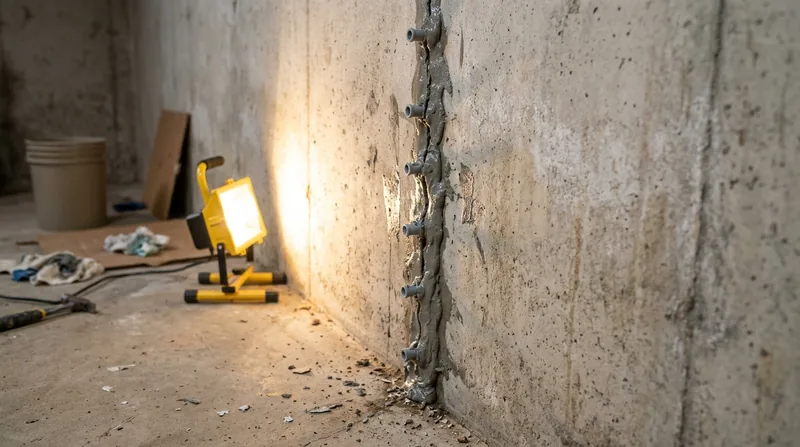




Kenosha sits on glacial till and lake-deposited clay over a high water table, and that ground stays wet from late winter into spring. On the south side and downtown, 1890s to 1920s brick and frame two-stories sit on stone or early block foundation walls, and those old walls crack along the mortar joints when frost works in. Near the Pike River, 1920s to 1940s bungalows and Cape Cods take water at the cove joint and through hairline cracks after every heavy summer downpour. Foundation Crack Repair in Kenosha starts with reading the crack itself: a shrinking vertical hairline is a different animal from a stair-step crack in a block wall or a horizontal crack that says the wall is bowing. We inject non-structural cracks with epoxy or polyurethane, and we tell you plainly when a crack is a symptom of hydrostatic pressure that a patch will not fix. If you are still sorting out where the water is coming from, start with a free basement inspection before you spend a dollar on repair.
Why Foundation Cracks Open in Kenosha's Clay and Frost
Kenosha's soils are heavy glacial clay, and clay holds water instead of draining it. When the water table rises in March and April, that saturated clay pushes against the foundation wall, and the pressure finds the weakest point: a cold joint, a mortar bed, or a block course. Add the freeze-thaw cycle, where water in a hairline freezes, expands, and widens the crack a little more each winter, and you get the pattern we see across the city.
- Vertical cracks in poured walls usually come from concrete curing shrinkage, and they are the easiest to inject and seal.
- Stair-step cracks in block or stone walls often follow hydrostatic pressure and need a closer look before anyone injects them.
- Horizontal cracks, especially with a wall pushing inward, point to bowing and are a structural question, not a sealing question.
- White efflorescence on the wall face means water has been moving through the concrete and depositing salts for a long time.
We match the repair to the crack type, because injecting a structural crack like a shrinkage crack just hides the problem until the next wet spring.
Key info: On a 1920s foursquare off Sheridan Road, we found a vertical crack at the corner of a stone foundation that had been patched three times with hydraulic cement. The patch kept failing because water was still pushing from the outside. Polyurethane injection from the inside stopped the seepage without excavating the yard.
Permits for structural foundation repair vary by jurisdiction, so confirm requirements with the City of Kenosha building department before work begins. You can check the city's permit information at kenosha.org.
How We Repair Foundation Cracks in Kenosha, Step by Step
Every crack gets inspected before it gets a method. We look at the width, the direction, whether the wall is moving, and whether water is actively seeping or only showing up after rain. That inspection decides whether you need injection, a structural repair, or drainage work behind the wall.
- We walk the basement and map every crack, marking width, direction, and any sign of movement or efflorescence.
- We check the exterior grade, downspout extensions, and window wells on that side of the house to see where water is being directed.
- For non-structural cracks, we drill injection ports along the crack and seal the surface with an epoxy paste.
- We inject epoxy for solid, cured cracks or polyurethane for cracks that are still seeping, because polyurethane foams and fills wet voids.
- We remove the ports, grind the surface flush, and confirm the crack is filled before we leave.
- If the crack is structural, we explain the options, including carbon fiber straps or wall anchors, and we do not inject over a moving wall.
You get a written explanation of what we found and why we chose that method, not just an invoice.
Key info: A split-level in Pleasant Prairie had a wet corner every spring and a hairline crack that looked harmless. The real issue was a downspout dumping at the foundation and a missing discharge extension. We injected the crack and rerouted the discharge, and the corner stayed dry through the next melt. For homes with the same pattern, our Pleasant Prairie service page covers the local conditions.
Crack Repair Methods We Use and When Each One Fits
Not every crack takes the same repair, and the table below shows how we decide. The method follows the crack, the wall material, and whether water is still active.
| Approach | Description | Best for |
|---|---|---|
| Epoxy injection | Structural-grade epoxy fills and bonds the crack faces back together. | Dry, non-structural vertical cracks in poured walls. |
| Polyurethane injection | Foaming resin expands into wet voids and stops active seepage. | Cracks that are still leaking or damp when we inspect. |
| Carbon fiber straps | Straps anchored to the footing and floor joist resist inward movement. | Bowing block walls with horizontal cracking. |
| Wall anchors | Exterior anchors pull a moving wall back toward plumb over time. | Walls that have moved but are not yet beyond correction. |
| Drainage correction | Interior drain tile and a sump basin relieve pressure at the footing. | Cracks that keep returning because water is still pushing. |
When the crack is a pressure symptom, we say so and point you to interior drain tile rather than selling you another injection.
Foundation Crack Repair Cost in Kenosha: What to Expect
Most single-crack injections in Kenosha start at $450, and that covers the inspection, port drilling, injection material, and surface finishing. The price moves with crack length, wall thickness, access, and whether the crack is still active. A short vertical crack in an open poured wall sits at the low end; a long stair-step crack in a block wall, or one behind a finished wall that has to be opened, sits higher.
Structural repairs are a different scope and are quoted after an on-site look, because carbon fiber straps and wall anchors depend on how far the wall has moved. Get two or three estimates and ask each contractor what method they plan to use and why. A quote that names the method and the crack type is worth more than a low number with no explanation. Our pricing page breaks down the ranges in more detail.
Hiring a Foundation Crack Repair Contractor Near Me in Kenosha
Ask for proof of licensing and insurance before anyone touches your foundation, and get a certificate of insurance sent to you directly. Ask what method they will use and whether they will inject a wall that is still moving, because the answer tells you whether they understand structural cracks. Check references from Kenosha or Pleasant Prairie jobs, and confirm who pulls any permit the work requires.
If your home is in a historic district or an HOA, check the rules before exterior work begins. And get the scope in writing: crack locations, method, and what happens if they find a second crack once the wall is open. Reach out through our contact page to schedule an inspection.
Foundation Crack Repair in Kenosha: Pricing Guide
| Service | Price | Details |
|---|---|---|
| Single crack injection (epoxy or polyurethane) | Starting at $450 | Includes inspection, port drilling, injection material, and surface finishing for one non-structural crack. |
| Multiple crack injection | Starting at $750 | Priced per crack; total depends on crack length, wall thickness, and access behind finished walls. |
| Structural repair (carbon fiber or anchors) | On estimate | Requires an on-site look to measure wall movement and choose straps, anchors, or drainage first. |
| Travel | Included | Covered in Kenosha and surrounding areas, with no separate call-out or mileage fee. |
| Estimate | Free | Response within 24 hours at (262) 287-9586, with no obligation to book the work. |
Indicative pricing, the exact cost depends on square footage, finish, and site access. Free personalized estimate within 24h at (262) 287-9586.


