



Basement Waterproofing in Kenosha
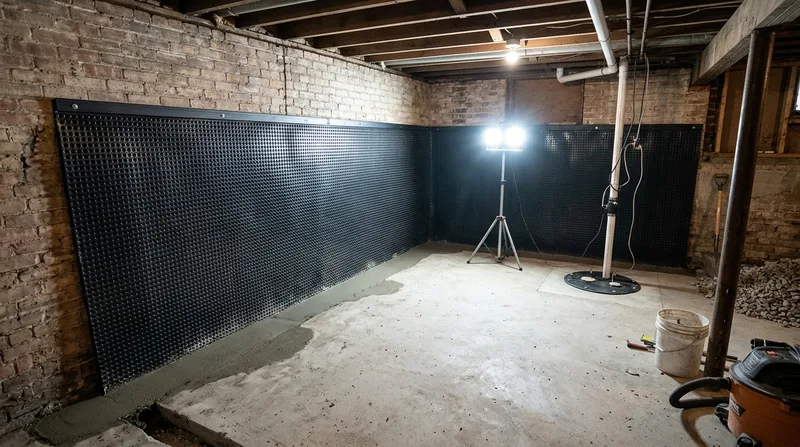
Kenosha sits on glacial till and lake-deposited clay over a high water table, and that ground stays wet from late winter into spring. In the 1890s-1920s brick two-story homes and foursquares on the south side and downtown, that means seepage through stone and early block foundation walls. Near the Pike River, the 1920s-1940s bungalows and Cape Cods take water at the floor joint when the river runs high. Basement Waterproofing in Kenosha starts with finding the real water path, not guessing at it. We trace where the water enters, then build a system that matches the house: interior drain tile and a sump pump for hydrostatic pressure, injection for a cracked wall, exterior membrane and dimple board when the wall itself is the source. You get a written scope, a transferable warranty, and a crew that works below grade only. Start with a free basement inspection and we will show you what the wall is doing.
Why Wet Basements Show Up Differently Across Kenosha
The failure mode that dominates here is hydrostatic pressure from a high water table pushing against the wall and the floor joint. On the west side, 1950s-1970s brick ranches and split-levels with poured or block lower levels crack at the cove and weep at the cold joint. Lakefront bluff homes at Simmons Island and Southport deal with shoreline erosion under the lower wall, and winter frost and freeze-thaw cycles open the seams further. Lake Michigan storms and heavy summer downpours push water toward the Pike River and into low corners, so the same house can stay dry in July and flood in March.
- Efflorescence and white powder on the wall mean water is moving through the block and evaporating inside.
- A musty basement smell after rain usually points to a wet floor joint or a failed drain tile, not to the wall paint.
- Water pooling at one low corner after a storm is a grading and downspout problem before it is a wall problem.
- A sump pump that runs constantly in spring is telling you the footing drain is undersized or clogged.
Read the symptoms honestly and you avoid paying for excavation the house does not need.
Key info: A 1920s foursquare off Sheridan Road with a stone foundation and a damp floor joint after spring melt usually needs an interior perimeter drain and a sump basin, not a full exterior dig. A 1990s poured-wall house in Pleasant Prairie with a single vertical crack needs epoxy or polyurethane injection first. Different houses, different answers.
Wisconsin does not license basement waterproofing as a standalone trade, so check registration and insurance directly with the Wisconsin Department of Safety and Professional Services before you sign anything.
How We Work: Tracing the Water Before We Cut Concrete
We start at the outside of the house and work inward. Grading, downspout extensions, window well drainage and the condition of the footing drain tell us whether the water is coming from the surface or from the water table. Then we map the wall itself: crack width, efflorescence pattern, bowing, and how the floor joint behaves after a hard rain. Only then do we recommend a system, because the wrong system costs more and fixes less.
- We inspect the foundation from the exterior, check grading and downspouts, and note any window wells that hold water.
- We inspect the interior wall, floor joint, and sump basin, and test the pump and check valve if one is installed.
- We identify the water source: surface runoff, hydrostatic pressure, a failing footing drain, or a structural crack.
- We write a scope that names the system, the materials, and the sequence, and we explain what simple crack sealing would and would not solve.
- We install, then test the system with water before we call the job done.
If the honest answer is a $600 crack injection and a longer downspout, we say so.
Key info: In Somers and Bristol, the 1990s-2020s subdivisions have poured full basements and clean walls, so a wet floor after a downpour is often the sump discharge line freezing or the check valve failing, not a wall leak. We have replaced pumps in those neighborhoods where the original builder-grade unit lasted twelve years and quit on a Sunday in April.
When the diagnosis points to an interior system, the detail lives on our interior drain tile page, and when the wall itself is saturated, the exterior method is on the exterior basement waterproofing page.
Waterproofing Methods We Use and When Each One Fits
No single method fits every Kenosha basement. The table below shows how we match the approach to the water source and the wall type, and it is the same logic we walk through on site.
| Approach | Description | Best for |
|---|---|---|
| Interior drain tile and sump basin | Perimeter channel cut at the floor joint, tied to a sump basin and pump | Hydrostatic pressure and a wet floor joint |
| Exterior membrane and dimple board | Excavate to the footing, membrane the wall, new footing drain and washed stone | Saturated block walls and failed original drain tile |
| Epoxy or polyurethane injection | Injection ports along the crack, sealed from the inside | A single non-moving vertical or diagonal crack |
| Wall sealing and vapor barrier | Parging, crystalline sealer, dimple mat and a sealed vapor barrier | Damp walls, efflorescence, and a musty smell |
| Sump pump and battery backup | Primary pump, check valve, discharge line, battery backup unit | Spring melt and storm-season power outages |
We combine these methods when the house needs it, and we keep the scope to what the water path actually requires.
Basement Waterproofing Cost in Kenosha: What to Expect
Most Kenosha basement waterproofing work starts around $2,500, and that figure buys a real system, not a patch. A single crack injection on a poured wall in a west-side ranch sits near the bottom of that range. A full interior perimeter drain with a new sump basin, pump and discharge line on a 1,000-square-foot basement runs well above it. Exterior excavation costs more because of the digging, the stone, and the restoration of walks and plantings.
- Basement size and wall length drive the linear footage of drain tile and the amount of concrete cutting.
- Wall material matters: stone and early block foundations need more prep than a clean poured wall.
- Access is a real cost factor on lakefront bluff homes where equipment cannot reach the wall.
- Pump quality, battery backup, and discharge routing change the total more than most homeowners expect.
- Structural issues like a bowing wall move the job into a different category and need an on-site look.
Get two or three written estimates and compare scope line by line, not just the bottom number. Our full pricing overview shows how the line items break down.
Hiring a Basement Waterproofing Contractor Near Me in Kenosha
Ask for the license and the certificate of insurance before the crew arrives, and call the references on jobs at least two years old. A waterproofing system that looks fine in October gets tested in March, so a recent reference tells you less than an old one. Ask who pulls the permit when the work alters drainage or the sanitary connection of a sump discharge, and confirm the answer with the local building department, because thresholds vary by jurisdiction. If you are in an HOA in Pleasant Prairie or Bristol, get the exterior work approved in writing first.
Expect a written scope that names materials and sequence, a transferable warranty in writing, and a crew that answers the phone after the job. If a bid is half the others with no explanation, ask what is missing. Contact us for a free estimate and we will put the scope in writing before any concrete is cut.
Basement Waterproofing in Kenosha: Pricing Guide
| Service | Price | Details |
|---|---|---|
| Crack injection (epoxy or polyurethane) | Starting at $2,500 | Includes port installation, injection and sealing on a single non-moving wall crack |
| Interior drain tile and sump basin | Starting at $4,500 | Perimeter channel, sump basin, primary pump and discharge line, priced by wall length |
| Exterior excavation and membrane | On estimate | Needs an on-site look for digging access, footing drain condition and walk restoration |
| Sump pump replacement with battery backup | Starting at $1,200 | Primary pump, check valve, battery backup unit and discharge routing included |
| Travel | Included | In Kenosha and surrounding areas, no separate call-out or mileage fee |
| Estimate | Free | Response within 24h at (262) 287-9586, no obligation to book |
Indicative pricing, the exact cost depends on square footage, finish, and site access. Free personalized estimate within 24h at (262) 287-9586.


