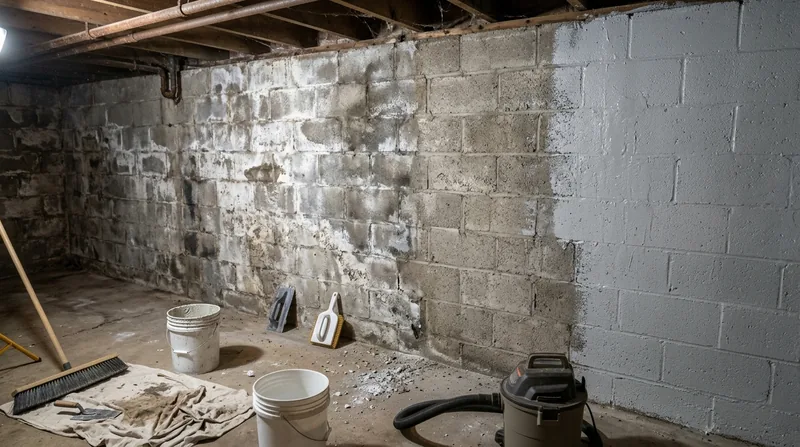




Kenosha sits on glacial till and lake-deposited clay over a high water table, and that ground stays wet from late winter well into spring. The 1890s to 1920s brick and frame two-stories downtown and on the south side often have stone or early block foundation walls, and those porous walls wick moisture straight into the basement. Basement Wall Sealing in Kenosha is the right first step when the problem is damp walls, efflorescence, and a musty smell, not a river running across the floor. We prep the wall, strip the efflorescence, and apply a penetrating or membrane sealer that blocks vapor and capillary seepage. If the real driver is hydrostatic pressure, we tell you plainly and point you to interior drain tile instead of selling you a coating that will peel by June.
Why Basement Wall Sealing Matters in Kenosha's Older and Newer Basements
Kenosha's housing stock spans three very different eras, and each one fails a little differently. The brick foursquares near the Pike River have lime-mortar joints that soften and let water travel through the wall, while the 1950s to 1970s brick ranches on the west side have poured or block walls that show hairline shrinkage cracks and damp patches after every heavy summer downpour. In the 1990s to 2020s subdivisions out in Pleasant Prairie, Somers, and Bristol, poured full basements are tighter but still bead with condensation when the clay soil outside holds water against the wall. Sealing addresses the wall surface itself, and it works best when we first confirm where the moisture is coming from.
- We check whether the dampness is capillary seepage through the wall or water being pushed in by hydrostatic pressure.
- We look for efflorescence, the white salt bloom that tells you water is moving through the masonry and evaporating.
- We inspect the grading and downspout extensions, because a downspout dumping at the wall defeats any sealer.
- We test for condensation by taping a vapor barrier square to the wall and reading it after a day.
- We note any step cracking or bowing, which means the wall needs structural attention before sealing.
Once we know which failure mode you have, the sealer choice and the prep work follow from it, not the other way around.
Key info: A 1920s brick foursquare near Simmons Island with white bloom on the wall and a musty smell is a classic sealing candidate. A 1960s ranch in Sturtevant with water standing at the cove joint after a storm is a drainage problem, and sealing alone will not fix it.
For the official word on what work needs a permit, check with the City of Kenosha building department before any structural or drainage alteration.
How We Seal Basement Walls in Kenosha, Step by Step
Sealing a basement wall is mostly prep, and prep is where most failed jobs went wrong. We start with a free inspection so we can see the wall, the floor joint, and the exterior grade before we quote anything. On a typical Kenosha block wall we wire-brush and scrape the surface, kill the efflorescence with a masonry cleaner, and let the wall dry to a readable moisture level. Then we patch voids and honeycombing with hydraulic cement or a parging coat, and only then apply the sealer in the direction and coat count the product calls for.
- We inspect the wall, the cove joint, the window wells, and the exterior grade to identify the moisture source.
- We remove loose paint, efflorescence, and old failing coatings so the new sealer can bond.
- We fill cracks and voids with hydraulic cement and, where needed, inject them with epoxy or polyurethane.
- We apply a penetrating sealer for damp masonry or a membrane coating for block walls with active seepage.
- We correct grading and downspout extensions so water sheds away from the foundation.
- We leave you a written note on cure time, ventilation, and what to watch for in the next rain.
If the inspection turns up a wall that is bowing or a footing drain that has failed, we say so and route you to the right repair instead of coating over a structural problem.
Key info: On a Cape Cod in Somers with a partly finished basement, we sealed the upper block course and left the lower course alone until the footing drain was cleared. Coating the whole wall would have trapped moisture behind the finish and made the musty smell worse.
If your wall is damp from the floor up rather than the top down, the better answer is often an interior perimeter drain in the 53142 area that relieves the pressure at the footing.
Sealing Methods We Use on Kenosha Basement Walls
Not every wall wants the same product, and the table below shows how we match the method to the wall type and the moisture pattern. We pick based on wall material, the amount of water moving through, and whether the basement is finished.
| Approach | Description | Best for |
|---|---|---|
| Penetrating sealer | Soaks into the masonry and reacts to block capillary seepage without a surface film. | Damp brick and block walls with no standing water. |
| Membrane coating | Flexible cementitious or elastomeric coat that bridges hairline cracks and resists mild pressure. | Poured walls with seepage after heavy rain. |
| Crack injection | Epoxy or polyurethane pushed through injection ports to fill the full depth of a crack. | Active leaks at a single vertical or step crack. |
| Parging and repair | Hydraulic cement and a parging coat rebuild spalled mortar and honeycombed block before sealing. | Old stone and early block walls downtown. |
| Drainage correction | Regrade the soil, extend downspouts, and clear window wells so water never reaches the wall. | Wet corners and walls wet only near the top. |
We often combine two of these on one wall, and we never quote a sealer when the inspection shows the water is coming up through the floor.
Basement Wall Sealing Cost in Kenosha: What to Expect
Most residential wall sealing jobs in Kenosha start at From $1,500, and that figure covers a typical basement wall run with prep, efflorescence removal, and one sealer system. The price moves up with wall length, the number of cracks that need injection, and whether the wall is stone or block that needs parging first. A finished basement adds labor because we have to protect and work around framing and drywall. Access matters too: a lakefront bluff home at Southport with a tight side yard takes longer to set up than a ranch in Pleasant Prairie with a wide driveway.
We quote after the free inspection, not over the phone, because the moisture source changes the scope. If you want the full breakdown of how we price sealing and related work, see our pricing page. Get two or three estimates and compare what is actually included, since a low number that skips prep will peel within a season.
Choosing a Basement Wall Sealing Contractor Near Kenosha
Ask three things before you sign: are they licensed and insured in Wisconsin, what does the written scope actually include, and can they show you a job like yours. A sealing quote should name the sealer, the prep steps, and what happens if the wall turns out to need injection or drainage work. Ask for references from Kenosha or Pleasant Prairie homeowners and call one. If the job touches a structural crack, an egress opening, or a change to how sump discharge connects, the local building department has to sign off, so confirm who pulls the permit. HOA rules in the newer Bristol and Somers subdivisions can also restrict exterior changes, so check before work starts. Reach out through our contact page to set up the free inspection and get a written scope.
Basement Wall Sealing in Kenosha: Pricing Guide
| Service | Price | Details |
|---|---|---|
| Single wall sealing, block or poured | Starting at $1,500 | Includes prep, efflorescence removal, crack fill, and one sealer system on a typical wall run. |
| Full basement, multiple walls | Starting at $2,800 | Covers the full perimeter, with price driven by wall length and number of cracks needing injection. |
| Stone or early block wall with parging | Starting at $3,200 | Adds hydraulic cement and parging to rebuild spalled mortar before any sealer goes on. |
| Crack injection add-on | Starting at $450 | Epoxy or polyurethane injection per active crack, priced by depth and access. |
| Complex or large-scale job | On estimate | Finished basements, bluff-side access, and structural concerns need an on-site look before pricing. |
| Estimate | Free | Response within 24h at (262) 287-9586, no obligation to book. |
Indicative pricing, the exact cost depends on square footage, finish, and site access. Free personalized estimate within 24h at (262) 287-9586.


