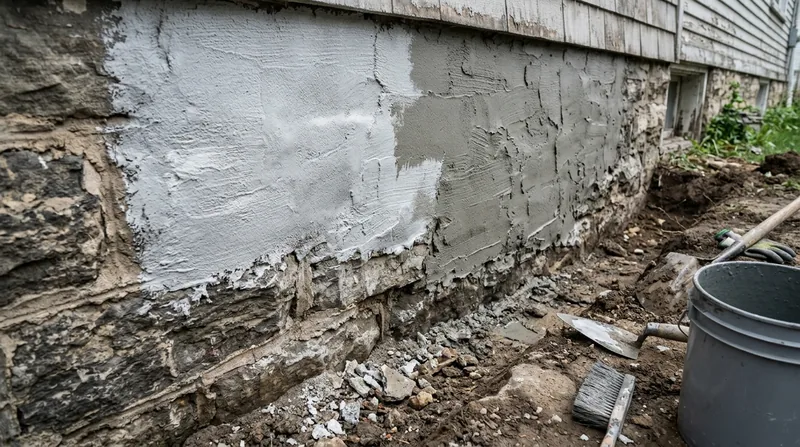




Foundation Waterproofing in Kenosha: Below-Grade Solutions for Stone, Block and Poured Walls
If you need Foundation Waterproofing in Kenosha, the ground under your home is already telling a story. Kenosha sits on glacial till and lake-deposited clay over a high water table, so the soil stays wet from late winter into spring. Downtown and south side homes from the 1890s to the 1920s often have stone or early block foundation walls, and many of those walls have been seeping for decades. Bungalows and Cape Cods near the Pike River deal with partly finished basements that stay damp after every melt. West side ranches and split-levels from the 1950s through the 1970s sit on poured or block lower levels that crack along the cold joints. Lakefront bluff homes at Simmons Island and Southport have stone and concrete walls under pressure from erosion and frost. Newer subdivisions in Pleasant Prairie, Somers and Bristol have poured full basements that are dry until the drain tile clogs. We match the repair to the wall you actually have. Start with a free basement inspection so we can read the wall before we quote anything.
Why Foundation Waterproofing Matters in Kenosha's Glacial Clay and High Water Table
The dominant failure mode in Kenosha is hydrostatic pressure from saturated glacial clay, not simple wall cracks. When the water table rises in March and April, water pushes against the footing and finds every cold joint, tie hole and hairline crack in the wall. Downtown and south side basements show white efflorescence and a musty smell first, then damp corners, then actual seepage after heavy rain. Lake Michigan storms and summer downpours push water toward the Pike River and into low corners, and winter freeze-thaw cycles open the same cracks a little wider each year. On the bluff edges at Simmons Island and Southport, erosion under the lower wall adds a structural problem on top of the moisture problem.
- Efflorescence on stone and block walls signals water moving through the masonry, not just surface condensation.
- Water after rain in a low corner usually points to a failed footing drain or a clogged interior perimeter drain.
- Bowing or inward-leaning block walls mean the pressure has become structural and need wall anchors or carbon fiber straps, not just sealing.
- Musty basement smell in a finished lower level usually means moisture is trapped behind the wall finish, not that the finish itself failed.
- Frost heave and freeze-thaw cycles widen existing cracks every winter, so a hairline in October is a finger-width gap by March.
We tell homeowners plainly when a crack is a crack and when the real problem is pressure. Simple crack sealing is enough when the wall is sound and the water is local. When the whole wall is wet, an interior drain tile system is usually the better answer than exterior excavation, and it costs less.
Key info: A 1918 foursquare on the south side with a stone foundation and a wet north corner is a drainage problem, not a crack problem. A 1965 brick ranch on the west side with one vertical crack and a dry wall is a crack problem, and epoxy injection closes it in a few hours.
Permits for structural foundation repair and work that alters drainage or the sanitary connection of a sump discharge vary by jurisdiction. Always verify the current rules with the City of Kenosha building department before work begins.
How We Waterproof a Kenosha Foundation, From Stone Walls to Poured Basements
We start by reading the wall and the water, not by selling a system. The inspection walks the interior perimeter, checks the footing drain and sump basin, probes the wall for hollow or soft mortar, and looks at grading and downspout extension outside. From there we match the repair to the foundation type and the pressure you actually have. A stone wall in a 1905 downtown home gets period-appropriate parging and crack repair plus drainage correction. A poured wall in a 2015 Pleasant Prairie basement gets injection and membrane work only where the water is coming through.
- We inspect the interior perimeter, sump basin, check valve and discharge line, and note where water actually enters.
- We map the cracks and cold joints and test the wall for hollow mortar, bowing and efflorescence.
- We check exterior grading, downspout extension and window well drainage on the wet side of the house.
- We recommend the least invasive fix that solves the problem, then quote it in writing before any work starts.
- We repair the crack with epoxy or polyurethane injection, or correct the drainage with an interior perimeter drain and sump basin where pressure is the cause.
- We finish with wall sealing, a vapor barrier or dimple board where the wall needs it, and verify the sump pump cycles correctly.
Every job ends with a wet test on the sump and a walkthrough of what we did and why.
Key info: A 1940s Cape Cod near the Pike River had water crossing the floor every spring. The footing drain was collapsed under the slab, so we installed an interior perimeter drain tied to a new sump basin instead of excavating the exterior. The basement stayed dry through the next melt. See how that compares with exterior basement waterproofing when the wall itself is failing.
Approaches We Use for Foundation Waterproofing in Kenosha
Not every wet wall needs the same treatment. The table below shows the main approaches we use and where each one fits. We pick from this list based on the foundation type, the water source and how much structural movement the wall shows.
| Approach | Description | Best for |
|---|---|---|
| Epoxy injection | Structural crack fill that bonds the concrete back together. | Dry, non-moving poured wall cracks. |
| Polyurethane injection | Flexible foam that seals active leaks and moving cracks. | Wet, seeping cracks and cold joints. |
| Parging and crack repair | Period-appropriate mortar repair for stone and early block walls. | Pre-1940 stone and block foundations. |
| Interior perimeter drain | Drain tile and sump basin that relieve hydrostatic pressure at the footing. | Wet floors and full-wall seepage. |
| Membrane and crystalline treatment | Waterproof coating matched to the wall material. | Damp walls with no active flow. |
| Wall anchors and carbon fiber straps | Structural restraint for inward-leaning block walls. | Bowing walls under soil pressure. |
Each approach solves a different problem, and combining two is common in older Kenosha homes.
Foundation Waterproofing Cost in Kenosha: What to Expect
Foundation waterproofing in Kenosha starts at From $3,500 for a focused repair such as crack injection or a partial drainage correction. A full interior perimeter drain with a new sump basin typically runs higher, and exterior excavation on a deep lakefront wall runs higher still. The number moves with the foundation type, the linear footage of wall involved, the depth of the footing, access to the basement, and whether the wall needs structural restraint on top of waterproofing. Stone foundations take more labor than poured walls because the mortar repair is slower and the wall is uneven. Getting two or three written estimates is smart, because a quote that skips the drainage diagnosis will not fix a pressure problem.
We break the work into line items so you can see what the drainage correction costs versus the wall sealing. Our full pricing overview shows the ranges we work from.
Foundation Waterproofing Near Me: How to Vet a Contractor Near Kenosha
Hiring the right contractor matters more than the product on the wall. Ask for proof of licensing and insurance before anyone steps into the basement, and ask whether they carry general liability and workers comp. Get two or three estimates and compare the diagnosis, not just the price, because a low bid that only seals the crack will not stop water coming through the footing. Ask for references from Kenosha and Pleasant Prairie jobs with the same foundation type as yours, and call them. Ask who pulls the permit if the work is structural or alters drainage, and confirm the answer with the local building department. If your home is in a historic district downtown or under an HOA in the newer subdivisions, check those rules before the crew arrives.
We walk you through all of this during the estimate, and you can contact us to schedule a free inspection at (262) 287-9586.
Foundation Waterproofing in Kenosha: Pricing Guide
| Service | Price | Details |
|---|---|---|
| Crack injection (epoxy or polyurethane) | Starting at $3,500 | Includes crack mapping, injection ports, and sealing of one to three cracks. |
| Partial drainage correction | Starting at $3,500 | Includes a section of interior perimeter drain tied to an existing sump basin. |
| Full interior perimeter drain and sump | On estimate | Priced by linear footage, footing depth, and whether a new basin is needed. |
| Exterior excavation and membrane | On estimate | Priced by wall length, depth, access, and soil conditions on the wet side. |
| Travel | Included | in Kenosha and surrounding areas, no separate call-out or mileage fee |
| Estimate | Free | Response within 24h at (262) 287-9586, no obligation to book |
Indicative pricing, the exact cost depends on square footage, finish, and site access. Free personalized estimate within 24h at (262) 287-9586.


