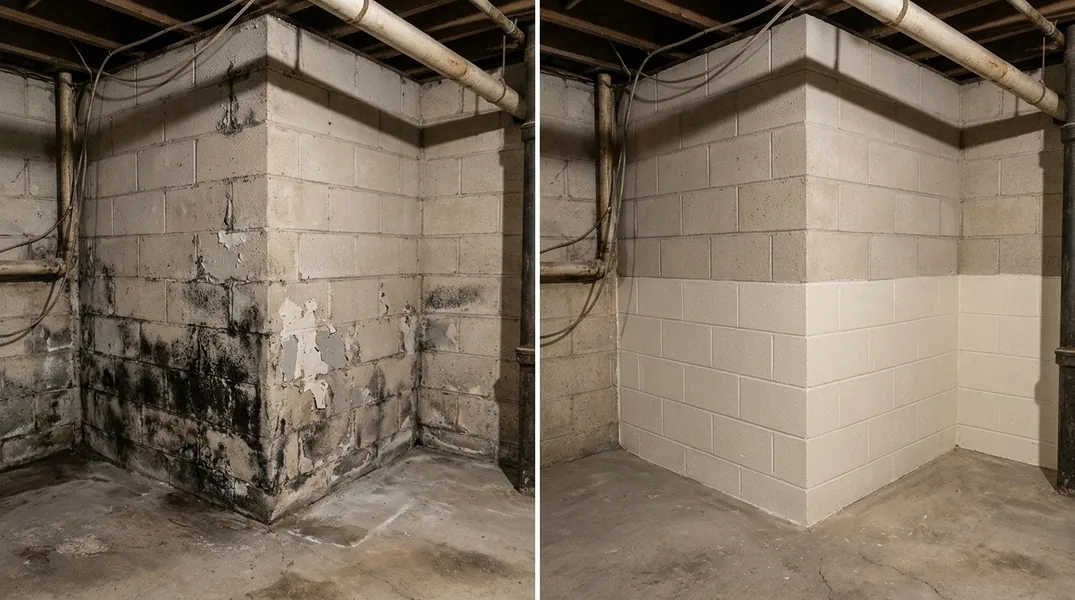
Why Kenosha Homes Face Unique Waterproofing Challenges
If you live in Kenosha, you already know that Lake Michigan is both a blessing and a challenge. The same glacial activity that carved out the lake also left behind thick deposits of lake clay, a dense, heavy soil that holds water like a sponge. When it rains, that clay swells and traps moisture against your foundation, creating hydrostatic pressure that pushes water through even the smallest cracks. This is why so many homeowners in Kenosha deal with damp basements, efflorescence, and musty odors that never seem to go away.
Understanding your soil is the first step in choosing the right waterproofing strategy. Unlike sandy or gravelly soils that drain quickly, lake clay foundation conditions mean water lingers. That changes the calculus between interior vs exterior waterproofing. An exterior membrane might seem like the obvious fix, but if the clay is already saturated, the water has to go somewhere. Similarly, an interior system must be designed to handle the volume of water that clay pushes toward your home. At Kenosha Waterproofing, we start every assessment by looking at your specific lot, grading, and soil conditions before recommending a solution.
Interior Drain Tile System: How It Works and When It Wins
An Interior Drain Tile System is installed along the inside perimeter of your basement footing. We break up a narrow strip of concrete, dig a trench, and lay perforated pipe that channels water to a sump pit. A sump pump then discharges the water away from your home. This approach is popular because it does not require excavating your yard, it can be done year-round, and it typically costs less than exterior excavation. It also addresses the water after it enters the foundation wall, which means it works regardless of soil type, including lake clay.
Interior systems are especially effective for finished basements where you want to minimize disruption. They also shine when the problem is a high water table rather than surface runoff. However, they do not stop water from entering the wall itself, so you may still see dampness or efflorescence unless you also seal the walls. For many Kenosha homeowners, an interior drain tile system combined with wall vapor barrier and proper grading is the most practical and affordable solution. If you are unsure whether this fits your home, our team can walk you through the pros and cons during a free estimate.
Exterior Basement Waterproofing: The Full-Shield Approach
Exterior Basement Waterproofing involves excavating down to the footing, applying a waterproof membrane to the foundation wall, and installing drain tile and gravel along the exterior footing. This method stops water before it ever touches your foundation, which is the gold standard for keeping a basement dry. It is particularly valuable in areas with expansive clay soils because it relieves hydrostatic pressure from the outside. If your home is in Pleasant Prairie or Somers, where lots are often larger and excavation is easier, exterior waterproofing can be a long-term fix that adds value to your property.
The trade-offs are cost and disruption. Excavation is labor-intensive, requires heavy equipment, and can damage landscaping, driveways, and decks. It is also weather-dependent, so it is best done in warmer months. For homes with finished basements or tight lots, the expense may outweigh the benefits. That is why we never recommend exterior work without a thorough inspection. Sometimes a hybrid approach, combining exterior membrane on the problem wall with an interior drain tile system elsewhere, gives you the best of both worlds. The key is matching the method to your home's specific vulnerabilities, not applying a one-size-fits-all solution.
Drain Tile vs Exterior Membrane: Which Is Right for Your Kenosha Home?
When comparing drain tile vs exterior membrane, think of them as complementary tools rather than competitors. Drain tile, whether interior or exterior, manages water by giving it a path to a sump or daylight drain. An exterior membrane is a barrier that prevents water from penetrating the wall in the first place. In lake clay foundation conditions, you often need both: the membrane to block moisture and the drain tile to relieve pressure and carry water away. Without drainage, even the best membrane can be compromised by hydrostatic pressure. Without a membrane, drain tile handles the water but leaves the wall damp.
For most Kenosha homes, the decision comes down to budget, basement use, and the severity of the problem. If your basement is unfinished and you have minor seepage, an interior drain tile system is often the most cost-effective first step. If you have significant bowing, recurring leaks, or a finished basement you want to protect, exterior waterproofing may be the better investment. We also consider Foundation Waterproofing as a whole, including crack injection, window well drainage, and grading corrections. A comprehensive plan addresses all water sources, not just the most obvious one.
Basement Waterproofing Cost in Kenosha: What to Budget
Homeowners often ask about pricing before anything else, and that is fair. Interior drain tile systems generally cost less than exterior excavation because they require less labor and no heavy equipment. Exterior waterproofing, while more expensive upfront, can last for decades and may be necessary if your foundation is structurally compromised. The exact cost depends on linear footage, accessibility, sump pump requirements, and whether you need additional repairs like crack sealing or window well replacement. We provide transparent, itemized estimates so you can see exactly what you are paying for.
It is also worth considering the long-term savings. A dry basement protects your HVAC equipment, stored belongings, and finished living space from mold and water damage. In a climate like ours, ignoring foundation moisture almost always leads to bigger repair bills down the road. We encourage homeowners to get at least two estimates and ask detailed questions about warranty, sump pump quality, and discharge methods. If you are comparing interior vs exterior waterproofing for your Kenosha home, our team can help you weigh the upfront cost against the expected lifespan and performance of each option.
Basement Waterproofing Near Me: When to Call a Pro
If you are searching for basement waterproofing near me in the Kenosha area, you are probably noticing one of the classic warning signs: water stains on the lower walls, a white powdery substance (efflorescence), musty smells, or visible cracks that seem to grow wider each season. These are not problems that resolve on their own. In fact, lake clay foundation soils can make them worse over time as the clay expands and contracts with moisture cycles. Small cracks can become big ones, and minor seepage can turn into standing water after a heavy storm.
Calling a professional early usually means a simpler, less expensive fix. We can inspect your foundation, identify the water source, and recommend a solution that fits your budget and your home's construction. Whether you need an interior drain tile system, exterior membrane, or a targeted repair, we serve homeowners throughout Bristol and the surrounding communities. Reach out to Kenosha Waterproofing at (262) 287-9586 or request a free estimate online. We will help you understand your options and make an informed decision, no pressure and no guesswork.
Looking for a professional basement waterproofing contractor in Kenosha? Kenosha Waterproofing responds fast for all your basement waterproofing needs.
Get a Free QuoteOur services: Basement Waterproofing · Interior Drain Tile System · Exterior Basement Waterproofing