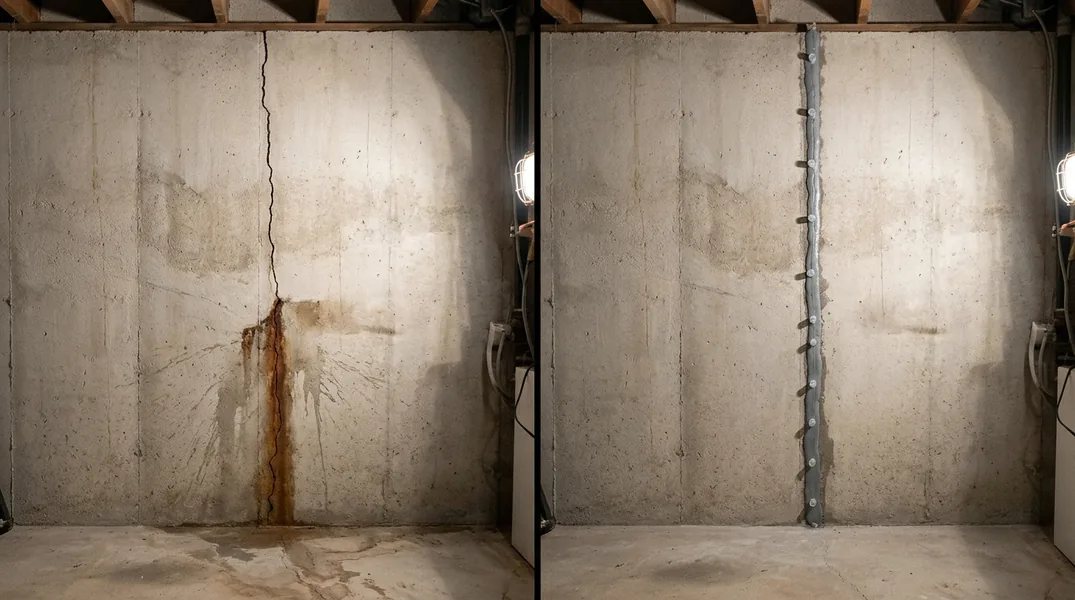
The Lake Clay Problem: Why Kenosha Soil Is Hard on Foundations
If you live in Kenosha, your home sits on some of the most challenging soil in Wisconsin. Much of the area is underlain by lake clay, a dense, heavy soil left behind by ancient glacial activity. This lake clay foundation material expands significantly when it absorbs water and shrinks just as dramatically when it dries out. That constant cycle of swelling and contracting puts enormous pressure on foundation walls, and over time, it is one of the leading causes of Kenosha foundation cracks.
Unlike sandy or gravelly soils that drain quickly, clay traps water against your foundation. After a heavy rain, the soil around your basement walls can stay saturated for days, keeping hydrostatic pressure high. That pressure pushes against the walls, forcing water through any hairline crack or porous spot in the concrete. Homeowners in Pleasant Prairie and Somers deal with the same clay soil basement leaks, because the geology does not stop at the city limits. Understanding this soil behavior is the first step toward protecting your home.
Frost Heave: How Wisconsin Winters Crack Foundations
Winter in southeastern Wisconsin brings another powerful force to bear on your foundation: frost heave. When the ground freezes, water in the soil expands and pushes upward and outward. If your foundation footings are not deep enough, or if the soil around your home holds excessive moisture, that expansion can lift and shift the structure. Frost heave foundation damage often shows up as horizontal cracks, bowing walls, or doors and windows that suddenly stick. These are not cosmetic issues. They signal that the structural integrity of your foundation is under stress.
The freeze-thaw cycle makes things worse. Each time the temperature climbs above freezing and drops again, the soil moves. Clay soil amplifies this movement because it holds so much water. By the time spring arrives, your foundation may have endured months of shifting pressure. That is why many Kenosha homeowners discover new cracks and leaks in March and April. If you notice any of these warning signs, it is worth scheduling a free estimate before the next freeze sets in.
Common Foundation Crack Causes and What They Mean
Not all cracks are created equal, and understanding foundation crack causes helps you decide how urgently to act. Vertical cracks are the most common and often result from concrete shrinkage as it cures, combined with soil pressure. They are usually manageable but still allow water intrusion. Diagonal cracks that start near the corners of windows or doors can indicate differential settlement, where one part of the foundation sinks faster than another. Horizontal cracks are the most serious because they often point to frost heave or excessive lateral soil pressure, and they can precede wall failure.
Other factors contribute as well. Poor grading that slopes toward the house, clogged gutters, and downspouts that dump water right next to the foundation all worsen clay soil basement leaks. Tree roots can also exploit existing cracks and widen them over time. The good news is that most of these problems can be addressed with professional Foundation Waterproofing. A thorough inspection identifies the type and cause of each crack, so the repair strategy targets the real problem rather than just the symptom.
Basement Waterproofing Near Me: Solutions That Work for Clay Soil
When you search for basement waterproofing near me in the Kenosha area, you will find plenty of options, but not all of them are built for lake clay conditions. The right approach depends on whether the water is coming through the walls, up through the floor, or both. For many homes, an Interior Drain Tile System is the most effective solution. It captures water at the base of the foundation and directs it to a sump pump before it ever reaches your living space. This system works well in clay soil because it manages hydrostatic pressure from the inside without requiring extensive excavation.
In some cases, Exterior Basement Waterproofing is the better choice, especially when the goal is to stop water at the source. This involves excavating around the foundation, applying a waterproof membrane, and installing drainage that moves water away from the home. For homes in Bristol and across the region, a combination of interior and exterior measures often provides the most durable protection. A professional assessment will tell you which approach fits your home, your soil conditions, and your budget.
Basement Waterproofing Cost in Kenosha: What to Budget
Homeowners often ask what pricing looks like for basement waterproofing in this area. The honest answer is that cost varies based on the size of your basement, the severity of the water problem, and the solution you choose. A simple crack injection is far less expensive than a full interior drain tile installation, and exterior work costs more because it involves excavation. Most reputable contractors provide a written estimate after inspecting the home, and you should be wary of any company that quotes a price over the phone without seeing the property.
It also helps to think of waterproofing as an investment rather than a repair expense. Unaddressed water intrusion can lead to mold growth, ruined finishes, and structural damage that costs far more to fix than prevention would have. If you are comparing quotes, make sure each one specifies the materials, the warranty, and the scope of work. To get a clear picture of what your home needs, call Kenosha Waterproofing at (262) 287-9586 or request a free estimate today. A dry basement is worth the peace of mind.
Looking for a professional basement waterproofing contractor in Kenosha? Kenosha Waterproofing responds fast for all your basement waterproofing needs.
Get a Free QuoteOur services: Basement Waterproofing · Interior Drain Tile System · Exterior Basement Waterproofing